
The Hero Trap
There’s a dangerous fantasy many Christian men believe:
“When my family needs me most, I’ll be at my best. When crisis hits, I’ll somehow find the strength. When spiritual warfare intensifies, I’ll rise above it through sheer determination.”
We imagine ourselves as the hero of our household’s story—summoning extraordinary courage at the critical moment, making the wise decision when it matters most, standing firm when everyone else would fall.
But here’s what that fantasy ignores:
What happens when you’re not at your best?
What about when:
- You’re exhausted from a brutal work week
- You’re emotionally drained from ongoing stress
- You’re physically sick and can barely function
- You’re spiritually dry and feel distant from God
- You’re mentally foggy and can’t think clearly
- You’re tempted in your area of weakness
In those moments—and they will come—heroic willpower fails.
The Military Alternative
Elite military units don’t rely on individual heroism. They build systems.
Standard Operating Procedures (SOPs) guide action without requiring genius in the moment.
Equipment maintenance prevents failure before it happens, rather than relying on extraordinary skill to repair it mid-mission.
Clear command structure prevents chaos when leaders are incapacitated.
Rehearsed drills create muscle memory that functions even when cognitive capacity is diminished.
Here’s the principle: Don’t build a plan that requires you to be extraordinary. Build a system that functions when you’re ordinary—or worse.
The Biblical Pattern
Psalm 1 gives us a beautiful picture of this principle.
Read it slowly:
Blessed is the man who walks not in the counsel of the wicked, nor stands in the way of sinners, nor sits in the seat of scoffers; but his delight is in the law of the LORD, and on his law he meditates day and night. He is like a tree planted by streams of water that yields its fruit in its season, and its leaf does not wither. In all that he does, he prospers. The wicked are not so, but are like chaff that the wind drives away.
Let’s Examine This:
Observation:
- Blessed man defined by what he does NOT do (v. 1) and what he DOES do (v. 2)
- “Meditates day and night” suggests continuous, habitual practice
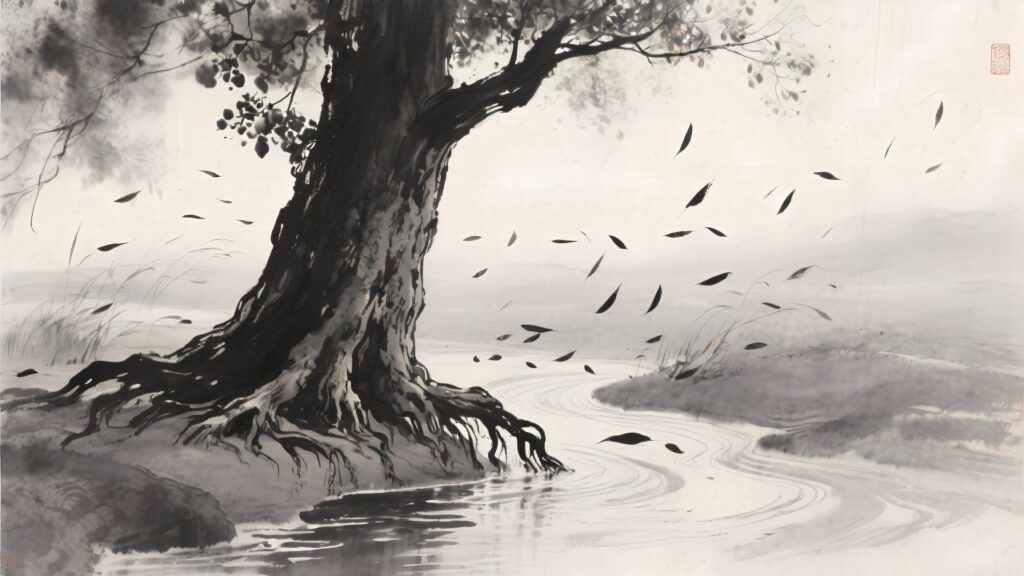
- Image of a tree planted by water—not searching for water, but naturally accessing it
- Fruit comes “in its season”—natural productivity, not forced
- Contrast with wicked: “chaff that the wind drives away”—no substance, no root, no stability
Context:
- Psalm 1 introduces the entire Psalter—it’s the gateway to all wisdom that follows
- Presents two paths: the way of the righteous vs. the way of the wicked
- Emphasizes the centrality of God’s Word in the blessed life
Interpretation:
The blessed man has built a system:
- Negative boundaries (v. 1): “Walks not…stands not…sits not”
- Progressive involvement with sin: walk → stand → sit (increasing entrenchment)
- Proactive avoidance, not reactive resistance
- Creates distance from temptation before willpower is required
- Positive practice (v. 2): “Delight…meditate day and night”
- NOT begrudging duty
- BUT delight-driven discipline
- “Day and night” = continuous, consistent, habitual
- “Meditates” = chews on, repeats, internalizes, applies
- Natural results (v. 3): “Like a tree planted by streams”
- Not striving for water—already positioned by it
- Fruit produced “in its season”—naturally, not through strain
- Leaf doesn’t wither—sustained vitality
- “Prospers”—spiritual flourishing, not necessarily worldly success
This is a system, not heroics:
- Predictable rhythms (day and night)
- Regular input produces reliable output (meditation → fruit)
- Sustainable (delight, not duty)
- Not dependent on extraordinary motivation
- Protects during times of weakness (boundaries prevent exposure)
Application to Household Leadership
Let me translate this into practical household systems:
System 1: Spiritual Intake That Functions on Autopilot
Heroic approach:
- “I’ll read my Bible when I feel motivated”
- “I’ll pray when I sense God’s leading”
- “I’ll have family devotions when it feels right”
Problem: This requires you to always have energy, desire, and clear thinking. You don’t.
System approach:
- Same time every day for Bible reading (make it automatic, not decision-dependent)
- Bible and notebook ready the night before (remove friction)
- Reading plan that doesn’t require choosing what to read (one less decision)
- Accountability tracking (simple checkmark system)
- Family worship at same time weekly (predictable rhythm, not spontaneous)
Result: Your spiritual intake happens regardless of how you feel. The system sustains you when motivation fails.
System 2: Boundaries That Prevent Temptation
Heroic approach:
- “I’ll resist temptation through willpower when it comes”
- “I’m strong enough to handle exposure”
- “I’ll be disciplined in the moment”
Problem: Willpower is a depleting resource. Eventually, you’ll be weak. Temptation chooses those moments.
System approach:
Identify your predictable temptations, then build structural barriers:
If your weakness is internet-related:
- Accountability software (Covenant Eyes, etc.) installed on all devices
- Phone stays in kitchen overnight, not bedroom
- No private internet use (work in visible spaces)
- Spouse has full access to browsing history
If your weakness is financial:
- Automatic savings withdrawal (before you can spend it)
- Budget accountability with spouse (all purchases over $X discussed)
- Credit cards locked in safe (debit only for daily use)
- Financial mentor who reviews statements quarterly
If your weakness is time management:
- Calendar blocked for family time (not negotiable)
- Work boundaries enforced (specific end time, protected)
- Phone on “do not disturb” during family hours
- One day per week completely offline
Result: You’re protected by structure, not willpower. When you’re weak, the system still works.
System 3: Household Rhythms That Don’t Depend on Your Mood
Heroic approach:
- “I’ll lead family worship when I feel spiritually alive”
- “I’ll pray with my wife when we’re getting along well”
- “I’ll disciple my children when I have energy”
Problem: You won’t always feel spiritually alive, be getting along well, or have energy.
System approach:
Establish non-negotiable rhythms:
Daily:
- Prayer with wife before bed (2 minutes minimum, even if you’re in conflict)
- One verse read and discussed at family dinner
- Individual prayer with each child at bedtime
Weekly:
- Sunday evening family worship (30 minutes: sing, read Scripture, pray)
- Date with wife (protected time, scheduled in advance)
- One meal where all devices are off and conversation is intentional
Monthly:
- Extended family worship/devotion time (1 hour)
- Marriage check-in conversation (joys, struggles, goals)
- Financial review with spouse
Result: Leadership happens consistently, not sporadically. The rhythm carries you when passion doesn’t.
Why Systems Work When Heroics Fail
Heroics require:
- Peak performance
- High motivation
- Clear thinking
- Emotional strength
- Spiritual fervor
Systems require:
- Following the pattern
- Showing up
- Executing what’s already decided
Heroics fail when:
- You’re tired (which is often)
- You’re discouraged (which happens)
- You’re tempted (which is regular)
- You’re distracted (which is constant)
- You’re weak (which is reality)
Systems work because:
- They don’t depend on your state
- They’re pre-decided (no decision fatigue)
- They have momentum (easier to continue than start)
- They create accountability (others expect them)
- They build over time (compounding effect)
The Tree vs. The Chaff
Psalm 1 contrasts two men:
The blessed man:
- Like a tree planted by water
- Deep roots
- Sustained by constant source
- Fruit produced naturally
- Withstands storms
The wicked man:
- Like chaff driven by wind
- No root system
- No substance
- Blown away by pressure
- Cannot stand in judgment
The difference? Systems vs. sporadic effort.
You see, the tree doesn’t scramble to find water each day. It’s planted by the stream. Its root system draws continuously from a constant source.
When drought comes (and it will), the tree survives. The chaff doesn’t.
Building Your System
Here’s your challenge:
This week, build or strengthen ONE system.
Choose from:
Option 1: Spiritual Discipline System
- Pick a specific time for Bible reading/prayer (not “when I can”)
- Choose a reading plan (don’t decide daily what to read)
- Prepare the night before (Bible open to tomorrow’s passage, coffee ready)
- Track consistency (checkmark on calendar)
- Goal: Remove all friction and decision-making
Option 2: Boundary System
- Identify your most common temptation
- Build a structural barrier (not just resolve)
- Examples: Software, financial limits, schedule blocks, physical barriers
- Tell someone what you’re doing (accountability)
- Test it this week
Option 3: Household Rhythm System
- Establish ONE consistent household practice
- Examples: Mealtime Scripture, bedtime prayer, weekly family worship
- Make it simple (sustainable matters more than impressive)
- Same time, same format, every occurrence
- Implement it daily or weekly
Write down:
- The system I’m building: ___
- The specific structure: ___
- How I’ll track it: ___
- Who will hold me accountable: ___
The Freedom of Systems
Here’s what’s liberating about this approach:
You’re not building perfection. You’re building a system that functions when you’re weak.
You don’t have to be:
- Always motivated
- Constantly strong
- Perpetually wise
- Continuously passionate
You just have to:
- Follow the system
- Show up
- Execute the pattern
The system carries you when you can’t carry yourself.
Remember
You’re not training to be a hero, you’re building to be a tree. Planted by streams of water, rooted deeply, drawing continuously, bearing fruit naturally, withstanding storms.
Not through extraordinary effort, but through ordinary, systematic faithfulness. Build the system now, before you desperately need it.
Because the time to dig a well is before you’re dying of thirst.
Leave a Reply